

When you first you land on a website like Goldzino Casino, the wall of flashing thumbnails and complex rule sets can be a lot to process https://goldzinobelgium.com. Following extensive hands-on testing, we’ve discovered that the smartest starting point is consistently free-to-play or demo mode. Nevertheless, numerous players overlook this training ground completely. Leaping straight into real-money spins without a safe practice run often empties your bankroll fast and makes you frustrated. We do not view demos as toys. We regard them as simulators where you can reverse-engineer volatility, test RNG fairness, and learn paytable mechanics without the emotional weight of losing cash. If you use the same focused focus you’d employ at a high-stakes live table, a free slot spin turns into a crash course in probability. The best players we watch do not divide “real” from “free” by attention level; they distinguish them only by the removal of risk. That mindset is what converts every free session on the lobby floor into something genuinely valuable.
Assessing the Supplier’s Software Reliability
Beneath the design and graphics is the binary robustness of the software, something we examine hard during free-play. We verify if the game client functions like a true client-side randomizer or if it pulls server-seeded data with a suspicious delay. In demo mode, a slight lag in spin execution, often concealed by flashy effects, can occasionally point to a strict server-verification procedure. That’s in fact a positive fairness signal, but it’s a element we need to understand before playing live. We also assess how well a game manages a disconnection during a bonus round. Restarting a demo client after initiating a mid-feature interruption shows whether the engine saves the state correctly, a crucial trust aspect. We also compare the theoretical RTP listed in the help files with our observed simulation data to check transparency. Our trust in an operator increases when the demo GUI corresponds to the paid GUI pixel for pixel, with no unexplained “demo mode only” adjustments in reel performance that might imply a fixed trial setup meant to deceive our live expectations.
Cross-Platform Analysis: Desktop vs Mobile Demo Performance

We pay close attention to how well a game performs, and free games give us the ideal testing ground to evaluate cross-platform performance. We test a single slot, like a visually demanding cascade title, in parallel on desktop browser and mobile touch screen in demo mode. We check for frame rate drops, sure, but also for UI layout shifts that could disrupt bet-sizing accuracy. On a limited mobile screen with touch controls, the “max bet” button can be a danger that real-money players fat-thumb. In demo mode, we can stress-test that danger zone without financial consequences. We also check RNG continuity across devices. The math must remain consistent, but we confirm that loading heavy HTML5 assets doesn’t freeze the screen during a important bonus gamble feature. This zero-risk QA process, which we run often at Goldzino Casino, means that when we do wager real money on mobile, we’re playing on a layout we’ve already memorized with our thumbs. That prevents muscle-memory errors that could gradually deplete the bankroll through accidental misclicks.
Decoding Bonus Mechanics and Staking Mechanisms
Practice games are our lab for deconstructing the “bonus buy” economy without spending cash. These acquisition features, often costing 50x to 100x the base bet, guarantee instant entry to free spins, but the volatility inside those bought rounds is rarely uniform. In demo mode, we buy the same feature five or ten times in a row and record the payback percentage. We often see a huge difference between the best-case teaser and the harsh median return, which falls well below the buy-in cost. That information, impossible to gather quickly with real money, reveals you if a slot is a high-stakes shortcut or a mathematical trap. At the same time, we measure how often organic bonus rounds activate. Using an auto-spin counter in demo mode, we can determine if a game promoted as having “frequent” features actually provides them once in a blue moon. This kind of analysis cuts through marketing hype and helps us select titles whose bonus rhythm matches our risk appetite before we ever touch our deposit.
Reading Paytables Like a Professional Analyst
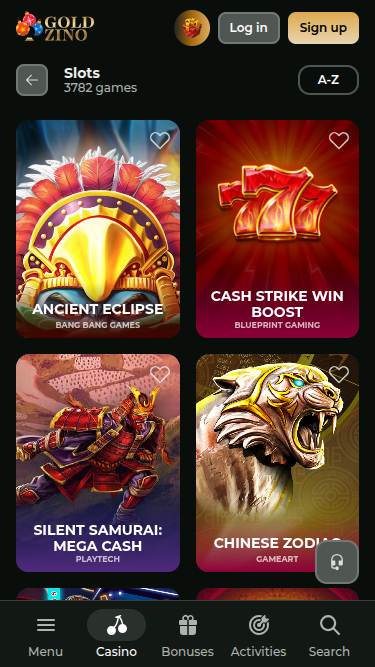
A paytable is not just a list of symbol values. It’s a map that uncovers a game’s mathematical bias if you know where to look. In free-play mode, you can halt and examine every footnote, multiplier rule, and scatter mechanic without time pressure. We kick off by spotting the highest-paying standard symbol and tracking its frequency, then dig into the fine print on wild substitutions. Some slots advertise huge jackpots but hide a clause that max payouts only activate on certain bet multipliers or bonus buys. When we check these rules in demos, we often find that a “high volatility” warning goes hand in hand with a steep drop in line-hit frequency during base gameplay. Being aware of this before you deposit means you won’t misinterpret a slot with 20,000x potential that mathematically demands a bankroll big enough to absorb a 15,000x loss before the variance turns. We approach the demo session as a due diligence audit. Here’s a list we run through for every paytable review:
- Identify the highest-paying standard symbol and its lowest cluster or line condition.
- Check whether wild symbols substitute for scatters or exclusively for standard pay symbols.
- Find any capped win clauses or maximum payout multipliers tucked in the fine print.
- Verify if the bonus round starts organically or needs a specific bet multiplier tier.
- Record any difference between advertised jackpot figures and the real coin values.
Detecting Hidden Volatility Through Extended Simulations
Volatility scores on the tin are convenient marketing, but they seldom tell the raw truth about how a game delivers its payback. In our practical reviews, we rely on free-play modes to gather real data on hit frequency, the share of spins that return a win relative to your stake. We start with a grid of 100-spin sample sets and note whether wins concentrate in the micro-stakes range or if the base game is mostly dead air crafted to direct you toward a bonus buy. Many modern Megaways or cluster-pay slots present a misleading average return because the math model depends on a single monster bonus round every 500 to 800 spins. In a paid session, you can go broke striving to reach that feature. In demo mode, you can securely watch the grueling stretches of dead spins without flinching. We advise running at least two separate trial sessions at different virtual bet levels to determine if the randomizer changes its seed behavior. That provides you with a clear view of the engine behind the lights.
Group and Collaborative Learning in Complimentary Lobbies
Solo grinding hones skill, but collective observation in free settings speeds up strategic learning. We favor a practice method where two analytical minds observe the same demo screen and discuss the probabilistic weight of a hold-and-respin feature in real time. This peer review prevents individual confirmation bias from taking root. One player might claim a slot is “hot,” while the other tracks the raw tally that proves underperformance. We use free table games to directly test complex strategy deviations, discussing a European Roulette neighbor bet coverage before the virtual ball lands. These collaborative sessions require nothing but greatly accelerate how fast you grasp complex playbooks. Social casino features and chat, even during demo play, provide a stream of crowd-sourced intelligence, though we filter that chatter carefully, separating for raw mechanical intel over user superstition. Watching other avatars play a free game sometimes reveals inventive betting progressions a solo reviewer would never imagine, widening our tactical repertoire before we dedicate real money to the live version of the same title.
Long-Term Evolution Tactics Employing Demo Updates
Game releases evolve constantly. Providers often push server-side patches that adjust math models slightly even after launch, and we use free games as an preventive system. Whenever a known slot receives a visual facelift or a ruleset update, we jump back into the demo version to run a comparison sweep. We verify if the scatter distribution or free-spin retrigger difficulty has been covertly changed. By keeping historical logs of our past demo performance on version 1.0, we can detect a 0.5% shift in feature frequency that casual players might overlook. This ongoing auditing guarantees our real-money strategy never depends on outdated intel. The free lobby also allows us to screen newly added titles rapidly without eating into our session time. We allocate a dedicated “scouting hour” each month, strictly in demo mode, to rapid-fire test every new release and pick out the top two percent that fulfill our strict volatility-to-entertainment criteria. This process of ongoing, risk-free due diligence is a key part of maintaining a sharp edge over the house’s constantly changing game library.
Honing Responsible Gaming Habits
We believe that free-to-play environments are the least utilized tools for building what we call “financial cushion.” Instead of treating demos as just games, we convert them into active simulators for deposit cool-off periods. When the urge to chase a loss strikes, switching quickly to a demo tab allows the neural craving for action to fire without draining your wallet. We’ve tried this “demo chase” idea a lot. Loading a high-risk free slot right after a painful real-money loss, the ritual of clicking “play” satisfies the procedural loop long enough for the prefrontal cortex to wrestle back control from the midbrain’s dopamine demand. This isn’t passive distraction; it’s a deliberate substitution tactic. We also use free modes to pre-test our loss-limit pain thresholds. We simulate a specific deposit amount and force a stop at a hard floor, physically stepping away when that virtual limit triggers. Conditioning yourself to walk away at a threshold, even with no real money lost, bolsters self-exclusion reflexes for the moments that count.
Using Practice Modes to Pressure-Test Reality Checks
Session time evaporates fast during high-engagement play. That’s why we use free environments to adjust our internal clocks and test how reality-check reminders affect us. In a demo, we turn off visual timers and rely only on gut timekeeping, then compare it against the platform’s session clock. What we usually find is a huge underestimation: a feeling of 15 minutes often means 45 minutes or more have actually passed. Free-play modes at modern sites have the same interface pace and auto-spin cadence as paid versions, so the time-dilation effect is identical. By running timed drills with a 10-minute alarm in demo, we train ourselves to handle interruptions without irritation. That makes it much easier to accept a live-session reality check and request a statement without emotional pushback. deze link Without money distracting you, demo play sharpens the mechanical habit of checking your balance and clock often, a habit that directly protects your bankroll discipline in high-stakes real-money settings.
Learning Table Game Tactics Without Ego
A complimentary digital blackjack or roulette table strips away ego fully. You may make the statistically correct play without concern about seeming unwise. We employ demo blackjack to ingrain perfect basic strategy until it’s automatic, shutting off the “feel” of the game and focusing only on the hard-total logic charts. In free mode, playing soft 18 against a dealer’s 3 becomes a dry academic habit, rather than a nerve-wracking risk. For baccarat and roulette, we run long sequence-tracking exercises to destroy the gambler’s fallacy dead. Watching a virtual wheel land red 12 times in a row without forfeiting a cent shows the reality of independent events better than any book. What we like about the table games part of the wider catalog at Goldzino Casino is the reaction speed. Practicing rapid-fire decisions against a fast demo dealer prepares https://www.bbc.co.uk/programmes/p07p4y8y your reflexes for the real-money lobby, without any financial trauma required.
The Technique of Advanced Multi-Hand Training
Going beyond single-hand play, we use multi-hand or multi-seat free tables to increase the cognitive load in a safe space. Managing three blackjack hands at once compels you to shift from a linear decision path to a triage system, choosing which hand needs immediate math correction. We push this to five hands in free demos, a volume that would become reckless with real money but functions as a great accelerator for pattern recognition. The point is not to mimic profit-seeking. We’re diagnosing our own weak spots under information overload. We clock ourselves, confirming if the correct surrender or split decision remains instinctual when the interface speeds up. With zero money on the line, we may test controversial moves, like staying on a stiff total against a strong upcard, merely to check how often those non-textbook plays actually work over a 500-hand sample. This type of intensive screen time etches optimal strategy deep into procedural memory.
The Psychology of Betting Risk-Free
Fear of loss is a cognitive bias that messes with your thinking when real money is at stake. In a zero-risk environment, you can strip a game down to its mathematics without the rushes of adrenaline that cause chasing. We’ve found that practice modes let you test your self-control: run a slot through 200 or 300 spins and see exactly how it behaves during a long cold streak. Without the worry of going to zero, your brain processes negative variance rationally, not reactively. We suggest creating firm pretend budgets even with demo credits. If you would never bump your bet in a real-money session, don’t do it in demo mode. That creates muscle memory for bankroll management and converts discipline from a intentional task into a reflex. Goldzino Casino’s interface makes transitioning between demo and live play seamless, which encourages this kind of psychological training more effectively than many rivals that bury free modes behind registration walls.
Closing the Divide from Demo to Real-Money Dominance
Shifting from a controlled demo environment to a real-money seat demands a rigorous system of parametrical transfer, not just a mental gear shift. We create what we refer to as “bridge metrics”: three non-negotiable rules we validate in free play before betting a single chip. First, a confirmed baseline hit rate expectation. We solely switch to real cash if the demo session demonstrated a hit rate in our comfort zone over a mathematically meaningful sample. Next, a mechanics comprehension test. We quiz ourselves on the bonus-tier rules so we are not caught off guard when a locked wild mechanic unexpectedly shifts a payline. Finally, a volatility synchronization check, where our projected deposit size mathematically lines up with the cold-streak duration we observed in practice. The most profitable players we’ve monitored never view the demo as a toy. They use it like a flight simulator, accumulating hours in the cockpit before transporting passengers up. Stick to that working standard, and the shift to betting real money becomes just a shift in data logging, not a jump into the unknown.
Using Free Spins as Educational Capital
We never judge promotional free spins just by their cash value. We treat them as educational capital and data-mining tickets. When we get a batch of no-deposit spins or demo credits on a new title, we refrain from spin blindly and hope. Instead, we document the reel-strip composition by observing symbol frequency during the free session. Since we don’t pay for the spins, we can focus purely on the output data. We carefully observe how a game handles “scatter teasers”: those near-miss bonus triggers that show two out of three required scatters. Monitoring these near-misses across 50 free spins exposes the psychological manipulation baked into the slot’s visual feedback loops. This objective, academic approach converts a giveaway into a private seminar on engine architecture. Studying how a provider structures near-miss signals in a risk-free trial enables us to pick apart the illusion of “almost winning,” a cognitive trigger we keep clinically vigilant against when we switch to funded real-money play.
Training Your Pattern Recognition Without Any Risk
For users who lean toward live dealer stats, free-play versions of game shows or automated roulette provide a canvas for advanced pattern discrimination training. We fully accept that each spin is independent, but we use these free demo streams to hone our visual speed at reading board history and derivative roadmaps. We can train “card counting lite” techniques in free digital blackjack where penetration is simulated, maintaining a running count in a distraction-free space until the tally becomes a mental reflex, not a chore. This isn’t about securing a win against a non-linear shuffle. It’s about packing more math processing into your session without the anxiety of a dealer deadline. We also use free demos of video poker variants like Jacks or Better or Deuces Wild to optimize our draw/discard decisions. Committing to memory the tricky exceptions, like retaining a suited ten over a single high card, takes hundreds of instant drills. The free-play format works like a perfect flash-card system, allowing our analytical mindset work the optimal strategy to a near-100% return expectation before we bet a single unit in the paid lobby.